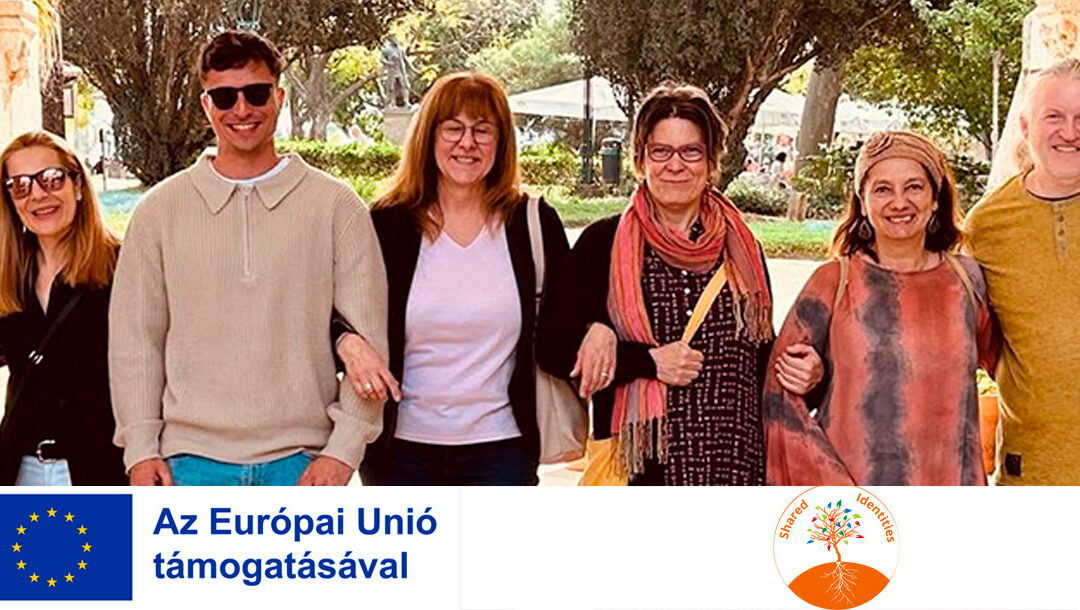
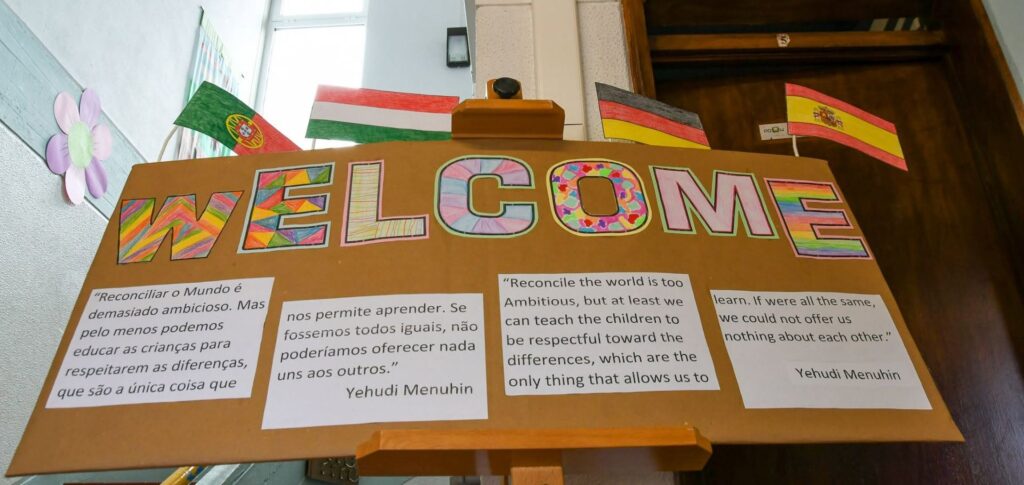
At the end of the 2025–2026 school year, the Hungarian team from Shared Identities – Identidades Compartidas has shared various news items about the activities carried out during the first few months of the project. Among them is the local press coverage of the second international exchange, which took place in Évora from April 22 to 24.
The initiative is coordinated by MUS-E Hungría and also brings together MUS-E Alemania, the Associação Yehudi Menuhin Portugal and the Fundación Yehudi Menuhin España. One of its goals is to broaden the international perspective of teachers and artists, exchange methodologies, and learn how arts education can promote inclusion in culturally diverse classrooms.
Following the meeting in Évora, the executive director of MUS-E Hungary, Ákos Gubinecz, and MUS-E artists Judit Hochrein and Gabriella Kenderesi were featured in a local Hungarian newspaper. The article discusses the MUS-E approach to inclusive arts education and highlights the exchange that took place with the Portuguese team.
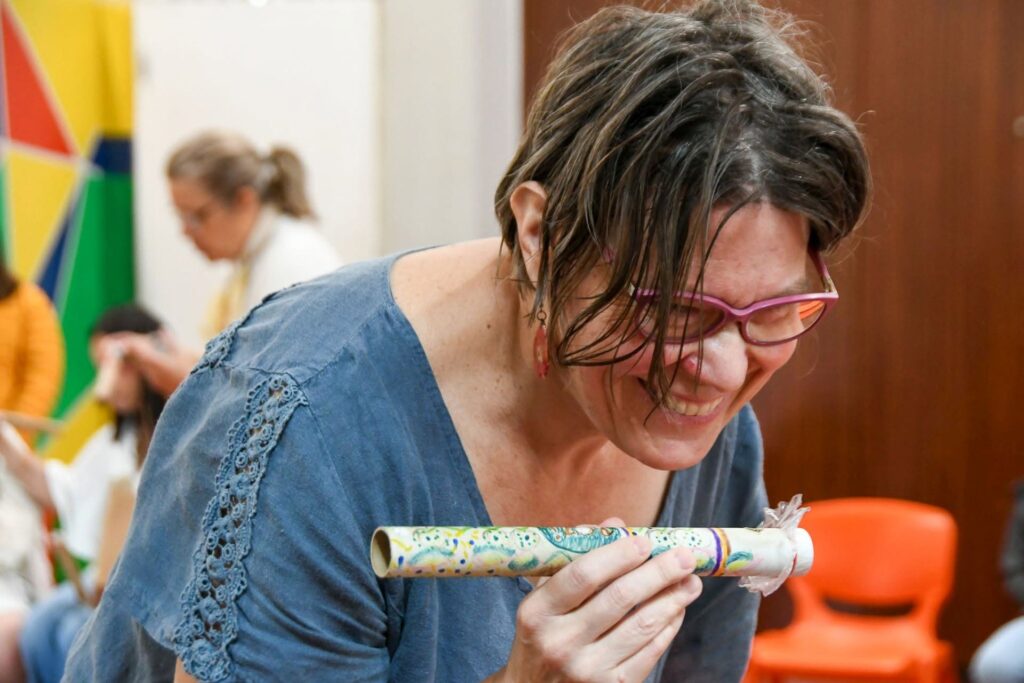
During the exchange, the group was able to observe classroom practices, share teaching methods, and gain firsthand insight into how the arts can contribute to inclusion in educational settings characterized by cultural diversity. Judit Hochrein reflects on her work and her experience in Portugal as follows:
“One of MUS-E’s greatest values is freedom.
We play lots of creative musical games. Sometimes we use sounds to express our surroundings or an entire day. I feel that the children really enjoy these sessions and look forward to them eagerly. In addition to learning songs and singing, we explore different themes through musical elements, complemented by movement, improvisation, and visual creation activities, making our time together even more engaging and meaningful. We’re delighted to see that, in this setting, teaching teams often discover completely new sides to their students.
My class at Landorhegyi School had already made contact with children in Portugal before our visit. We had greeted each other via video call, exchanged messages in English, and also prepared a small gift for our partner class: a personalized colorful paper trumpet for each child. In Portugal, I even had the opportunity to play these instruments together with them.
The purpose of the visit was to broaden our international perspective, learn about others’ best practices, and gain inspiration for our future work. “I can say that it was an amazing experience to visit a Portuguese school attended by children from 26 different nationalities. We were able to see how MUS-E teachers and artists work with truly diverse classes, made up of children from very different cultural backgrounds. And perhaps this diversity isn’t just a challenge—it also offers countless opportunities and advantages.”
The full publication is available at the artículo del medio húngaro ZAOL.
The Shared Identities program is co-funded by the Programa Erasmus + de la Unión Europea.
The European Commission’s support for the production of this publication does not imply endorsement of its contents, for which the authors are solely responsible. Therefore, the Commission is not responsible for any use that may be made of the information contained herein.
Recent Comments