The European project Shared Identities – Identidades Compartidas, coordinated by MUS-E Hungría, brings together MUS-E Alemania, the Associação Yehudi Menuhin Portugal and the Fundación Yehudi Menuhin España in a joint project with schools in Budapest, Düngenheim, Évora, and Madrid.
Over the course of its 24-month duration, the initiative aims to promote inclusion and diversity through the arts, strengthen collaboration among schools, teachers, and artists in the four countries, and share methodologies for exploring personal and collective identity in the classroom.
At the end of the 2025–2026 academic year, the team responsible for developing the project in Hungary submitted a series of reports on the work carried out during these first few months. The first of these reports covers the initial international mobility event, held in Budapest from November 16 to 18, 2025:
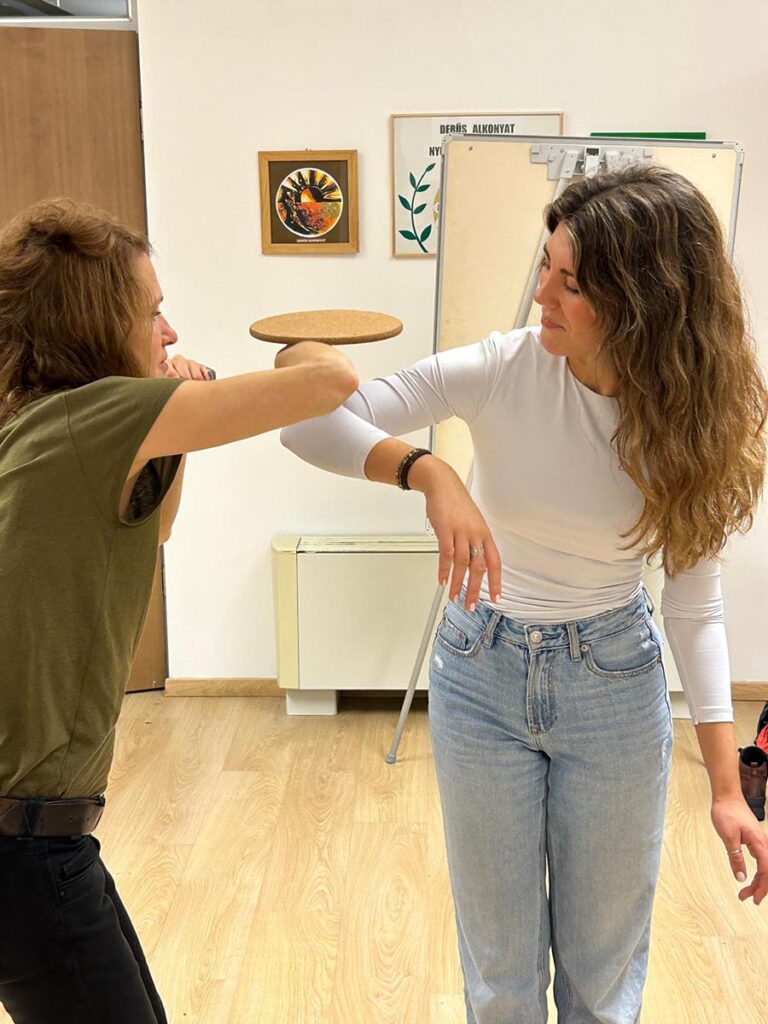
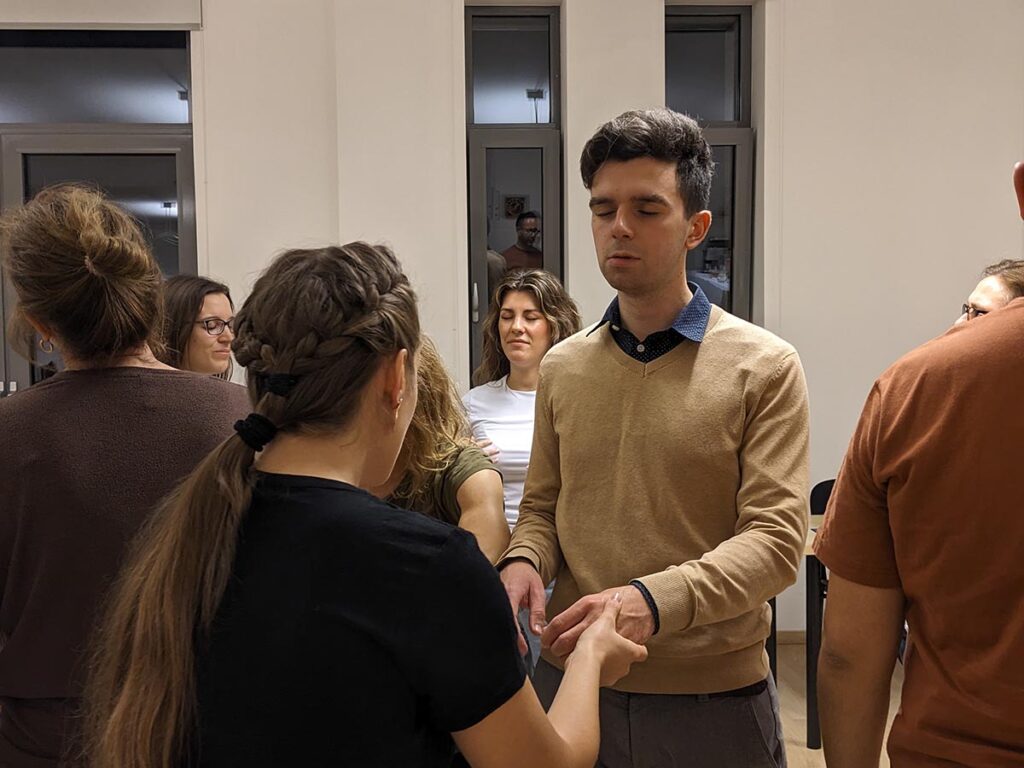
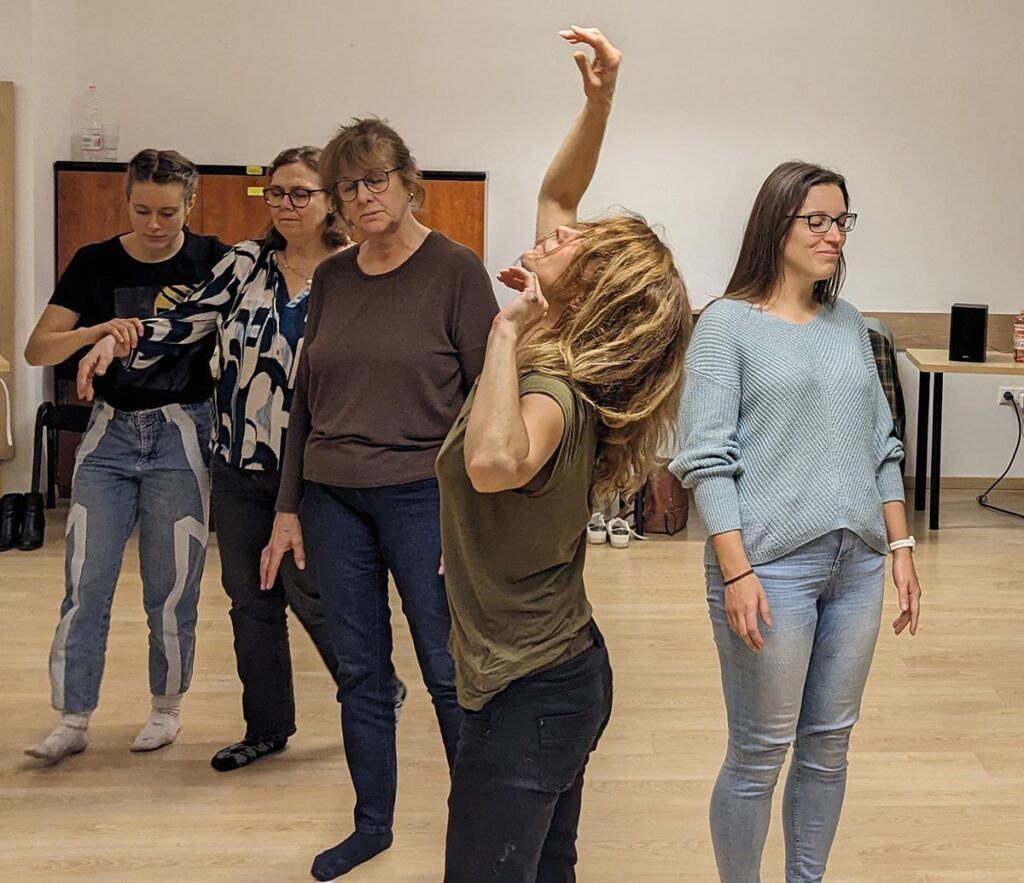
Our first international exchange felt less like a formal beginning and more like a quiet arrival. From November 16 to 18, 2025, two people from Germany, three from Spain, and two from Portugal joined the Hungarian team for the launch of Shared Identities. Budapest became our temporary meeting place.
Three days were enough to slow down, come face to face with one another, and start listening: to each other, to the children, and to the shared rhythm of our work.
One of our first shared experiences took place at the Lázár Ervin Elementary School, one of the project’s partner schools in Budapest. Instead of presentations and theory, we jumped right into play and interactions with the children. We joined a class where Hungarian artists from MUS-E invited us to participate in their creative process: traditional circle games, songs, and dances emerged naturally, without any explanations. It was a brief but meaningful glimpse into how shared creation works in everyday school life.
The school principal welcomed us and gave us a tour of the building, opening the doors not only to the classrooms but also to conversation. We talked about how education is organized, how the children’s days are structured, and how after-school programs promote learning and well-being.
In the afternoon, Ákos Gubinecz, executive director of MUS-E Hungary, singer, and folk artist, opened the session with a brief musical performance and a team-building activity that energized the group. Afterward, movement and music artist Réka Horváth led an open and playful workshop that invited us to connect with our bodies and pay attention to others.
Our initial meeting was held in the same spirit. Instead of going over documents, we focused on the essentials: what we value, how we work creatively, and how we want to collaborate across countries.
As part of the program, we visited the Hungarian House of Music, where we took part in a guided tour of the history of music. The visit gave us a chance to explore sound, instruments, and musical traditions, adding another shared experience to our stay in Budapest.
The real work begins now. From here on, the project continues in the schools through workshops, artistic processes, and daily interactions with the children. This first meeting provided us with the foundation to move forward together.
The Shared Identities program is co-funded by the Programa Erasmus + de la Unión Europea.
The European Commission’s support for the production of this publication does not imply endorsement of its contents, for which the authors are solely responsible. Therefore, the Commission is not responsible for any use that may be made of the information contained herein.
Recent Comments